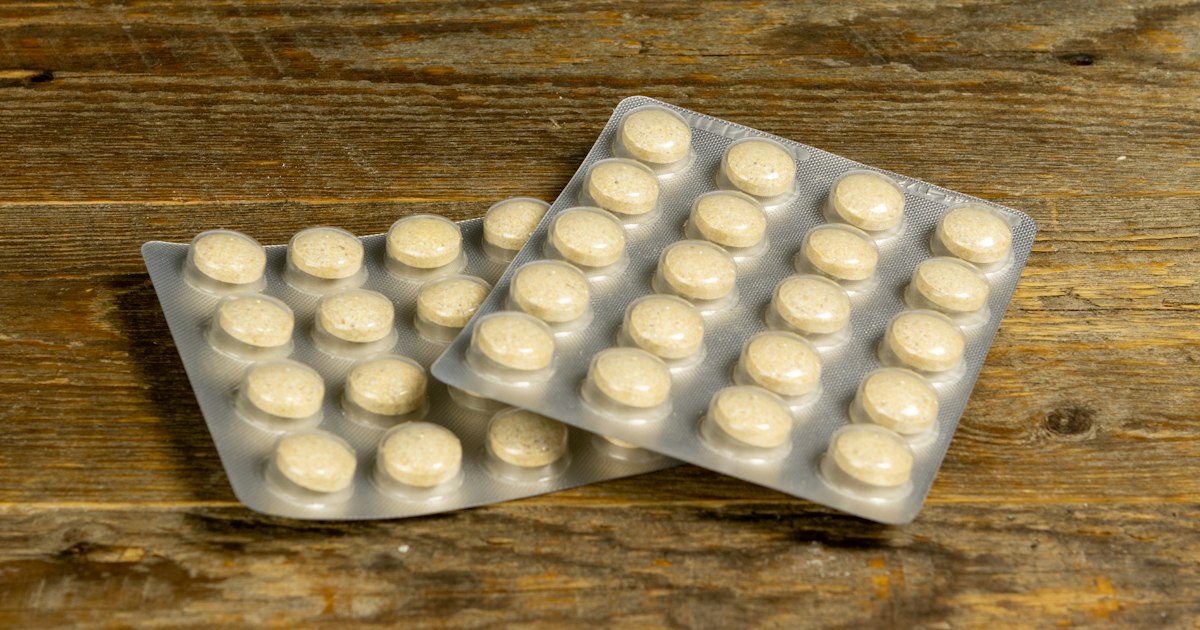
The Benefits of Bacopa Monnieri for Athletes: The Evidence Base

Bacopa monnieri is increasingly offered to athletes as an aid for concentration, stress resilience and "mental endurance." Unlike many plant supplements, it has several randomized studies and meta-analyses on memory. But do these results carry over to sport? The editors examined the evidence base from the standpoint of the training process and competition.
The cognitive demands of sport
Athletic performance depends not only on strength and endurance. In team sports, combat sports and racket sports, the speed of decision-making, attention, memory for tactical patterns and the ability to stay focused under pressure are important. It is precisely these qualities that the marketing of "nootropic" supplements targets.
However, there is a large distance between a laboratory test and the field or the ring. An improved result on a word-memorization test does not necessarily mean better play. Therefore, in assessing bacopa for athletes, we distinguish evidence on cognitive functions in general from evidence on athletic performance.
It is also worth considering the specifics of how bacopa acts. In studies the effects on memory developed over weeks of regular intake. This fundamentally distinguishes it from caffeine, which acts within an hour and has convincing data on athletic performance.
Finally, most bacopa studies were conducted on students, office workers and the elderly. There are practically no trained athletes among the participants, which limits the generalization of the conclusions.
Memory and learning: the strongest part of the evidence
The most convincing data concern memory. In the study by Stough and colleagues (2001), 12 weeks of taking 300 mg of standardized extract improved the speed of processing visual information, the speed of learning and memory consolidation in healthy adults. Roodenrys and colleagues (2002) showed improved retention of new information.
A systematic review by Pase and colleagues (2012) concluded that bacopa may improve memory, primarily free recall. The meta-analysis by Kongkeaw and colleagues (2014), which combined nine randomized studies, confirmed improvement in certain cognitive tests, in particular in choice reaction time and in tests of attention.
For an athlete, the potentially interesting aspect is precisely the ability to assimilate new information: tactical patterns, combinations, technical elements. However, none of the studies known to us directly measured the speed of learning sports skills.
Therefore, the correct formulation is this: bacopa has moderate evidence of improving certain aspects of memory in healthy adults, and their significance for athletic preparation is a hypothesis that still needs to be tested.
Reaction, stress and anxiety
Reaction speed is key for many sports. In the meta-analysis by Kongkeaw and colleagues, bacopa reduced choice reaction time in cognitive tests. This is an interesting signal, although the effect size is small and the tests were computer-based rather than sport-specific.
As for stress, in the study by Calabrese and colleagues (2008) in elderly people, after 12 weeks of intake, anxiety and depression scores on questionnaires decreased. Benson and colleagues (2014) studied single doses of 320 and 640 mg of extract before performing a multitasking task that modeled stress, and reported certain positive changes in cognitive performance and mood, although the results were not unambiguous.
| Measure | Study | Duration | Result | Significance for sport |
|---|---|---|---|---|
| Memory, learning | Stough 2001; Roodenrys 2002 | 12 weeks | Improvement | Indirect, not verified |
| Recall | Pase 2012; Kongkeaw 2014 | Reviews | Moderate improvement | Indirect |
| Choice reaction time | Kongkeaw 2014 | Review | Small reduction | Potentially interesting |
| Anxiety | Calabrese 2008 | 12 weeks | Reduction in scores | Indirect, different population |
| Stress under multitasking | Benson 2014 | Single dose | Ambiguous | Weak |
| Physical performance | — | — | No quality data in humans | Unknown |
For competitive anxiety, which many athletes face, these data are so far indirect. Working with a sports psychologist, breathing techniques and sufficient sleep have far greater practical value.
Physical performance and recovery
We found no direct randomized studies of the effect of bacopa on strength, endurance or speed in humans. Claims of "anti-stress support during overtraining" or "accelerated recovery" rely mainly on animal models, in which the extract affected markers of oxidative stress and stress proteins.
Extrapolating such data to trained humans is unreliable. Moreover, as with other antioxidants, it is theoretically even possible that some signals of adaptation to training could be blunted - although this has not been studied for bacopa.
The practical side effects of bacopa for an athlete are also worth considering:
- digestive disturbances - nausea, cramps, diarrhea, which are inappropriate before a workout or competition;
- possible drowsiness or fatigue in some people, especially at the start of intake;
- slow development of the effect - a single dose before a start is unlikely to make sense.
Bacopa, anti-doping rules and product quality
Bacopa monnieri is not on the World Anti-Doping Agency's Prohibited List. By itself it does not create a risk of violating anti-doping rules.
However, athletes who undergo testing must remember the risk of supplement contamination, especially in multi-component "nootropic" and pre-workout complexes. Responsibility for the content of a sample lies with the athlete, regardless of where the banned substance came from.
Therefore, it is advisable to choose single-ingredient products from manufacturers that undergo independent certification for the absence of banned substances, and to keep the packaging and receipt in case of a review.
When assessing a product, it is also worth paying attention to the bacoside content and the extract dose: studies most often used about 300 mg of standardized extract per day for 12 weeks.
Editorial conclusions
Bacopa monnieri has moderate but reproducible evidence of improving memory, especially recall, as well as a small reduction in reaction time in cognitive tests after prolonged intake.
There are no direct studies in athletes and no data on physical performance. For recovery and stress resilience in sport, the evidence is limited to indirect data and animal models.
Bacopa is not banned by WADA, but its effect develops over weeks, and digestive disturbances can interfere with training.
We also recommend reading "Bacopa Monnieri: What It Is and How It Works," "The Benefits of Ginkgo Biloba for Athletes: The Evidence Base" and "What to Combine Ginkgo Biloba With."
References
- Stough C, Lloyd J, Clarke J, et al. The chronic effects of an extract of Bacopa monniera (Brahmi) on cognitive function in healthy human subjects. Psychopharmacology (Berl). 2001;156(4):481–484.
- Roodenrys S, Booth D, Bulzomi S, et al. Chronic effects of Brahmi (Bacopa monnieri) on human memory. Neuropsychopharmacology. 2002;27(2):279–281.
- Calabrese C, Gregory WL, Leo M, et al. Effects of a standardized Bacopa monnieri extract on cognitive performance, anxiety, and depression in the elderly: a randomized, double-blind, placebo-controlled trial. J Altern Complement Med. 2008;14(6):707–713.
- Benson S, Downey LA, Stough C, et al. An acute, double-blind, placebo-controlled cross-over study of 320 mg and 640 mg doses of Bacopa monnieri (CDRI 08) on multitasking stress reactivity and mood. Phytother Res. 2014;28(4):551–559.
- Pase MP, Kean J, Sarris J, et al. The cognitive-enhancing effects of Bacopa monnieri: a systematic review of randomized, controlled human clinical trials. J Altern Complement Med. 2012;18(7):647–652.
- Kongkeaw C, Dilokthornsakul P, Thanarangsarit P, Limpeanchob N, Norman Scholfield C. Meta-analysis of randomized controlled trials on cognitive effects of Bacopa monnieri extract. J Ethnopharmacol. 2014;151(1):528–535.
- Aguiar S, Borowski T. Neuropharmacological review of the nootropic herb Bacopa monnieri. Rejuvenation Res. 2013;16(4):313–326.
- World Anti-Doping Agency. The World Anti-Doping Code: International Standard — Prohibited List. Montreal: WADA; оновлюється щороку.
Andriy Melnyk
A strength-sports coach and author of programs for beginner and intermediate levels. Writes about training planning.